Logistics
Example scenario
40 vehicles, 6 hours of driving a day, 10% off-route
→ ~7,200 wasted driving hours a year
3 recommended solutions
Go


Optimise the day for your delivery and field teams with planning that respects vehicle capacity, time windows and your priority rules.
Core problem it solves
When routes are planned from experience alone, deliveries per vehicle drop and fuel and overtime costs become unpredictable.
A real capture of the product, not a mockup.
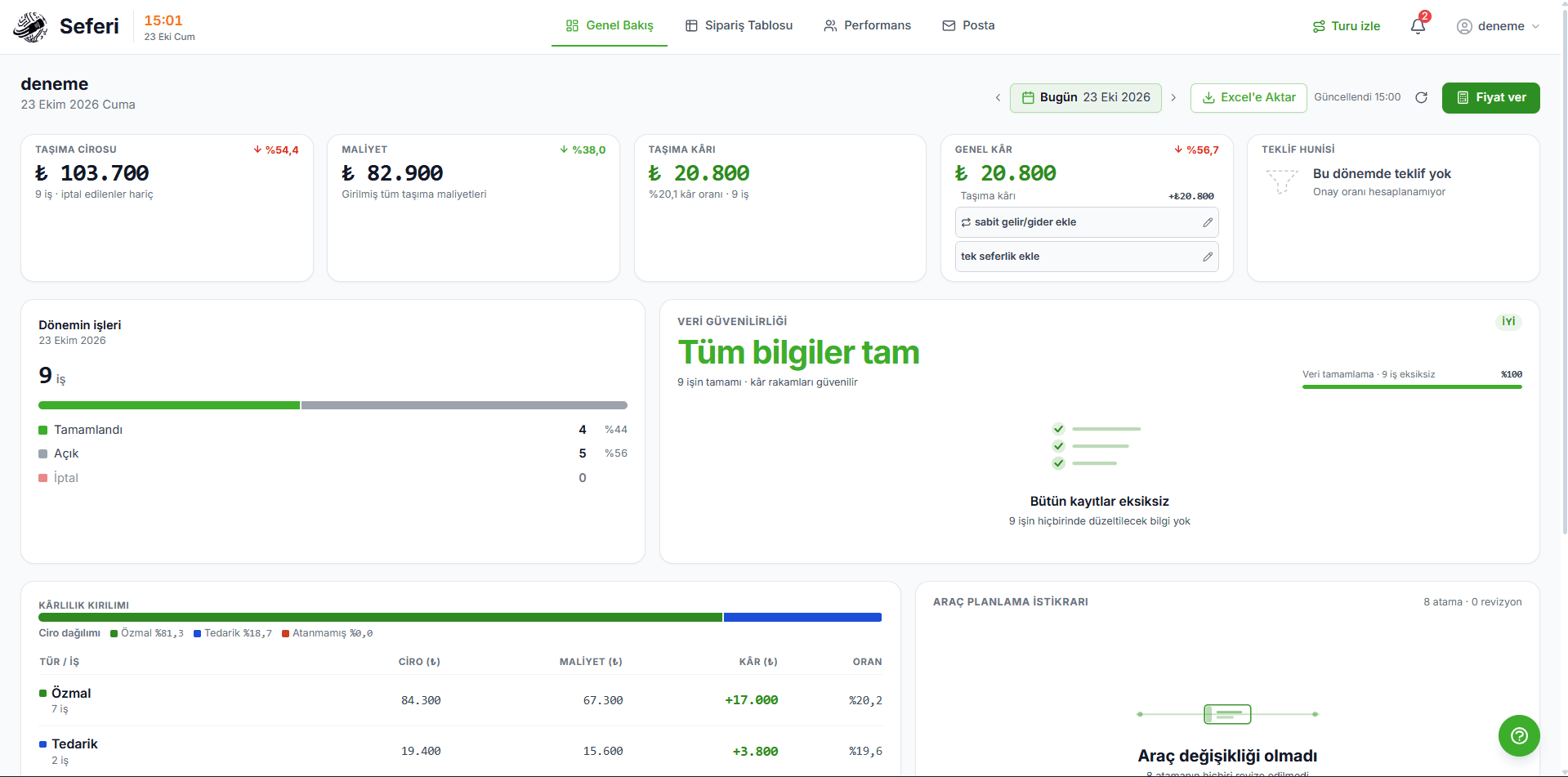
The solution builds the daily operating plan from order, vehicle, driver and time-window data. When something changes mid-day — traffic, a cancellation, an urgent job — the plan is recalculated and pushed to the field. The planner stays in control at every step: the system proposes, you approve and adjust.
Vehicle capacity, driver hours, time windows and territory rules are all part of the plan.
Routes are recalculated quickly after cancellations, delays or new requests.
Customers receive an estimated window and an update if it shifts.
Drivers and technicians see the day as an ordered task list.
Test different fleet sizes or shift patterns and compare the outcomes before committing.
Planned versus actual is reported so the cause of deviations can be traced.
Vehicle and crew capacity is distributed more evenly across the plan.
Hours of manual work shrink and the plan is ready before the day starts.
Delivery windows become something you can share and track.
Plan-versus-actual comparison makes improvement areas visible.
Daily routes are generated automatically for dense delivery areas.
Technician appointments are planned around skills and location constraints.
Plans respect the slots customers selected.
Additional vehicle needs for campaign periods are calculated in advance.
Vehicle, crew, territory and time rules are collected from your current operation.
Data flows from your order management and fleet tracking systems are established.
Priorities and objectives are defined, and first plans are compared with current results.
We pilot in one region, then widen the scope.
Example scenario
40 vehicles, 6 hours of driving a day, 10% off-route
→ ~7,200 wasted driving hours a year
Example scenario
80 stores, 15 minutes of head-office correspondence each per day
→ ~400 hours a month
Example scenario
500 support requests a day, 60% asking about order status
→ ~9,000 repeat questions a month
Example scenario
400 appointment calls a day, 25% unanswered at peak hours
→ ~3,000 missed booking requests a month
Example scenario
12 service points, 60 booking calls a day, 20% unanswered
→ ~4,300 missed calls a month
Fill in the form and we will plan a demo around your needs.
Automate repetitive steps and customer communication end to end so every request reaches the right person on time.
Answer, route and record inbound and outbound calls with AI assistants that hold a natural conversation.
In a short call we listen to your needs and share the right solution and a deployment plan.